

Dental Crowns in Coral Springs FL
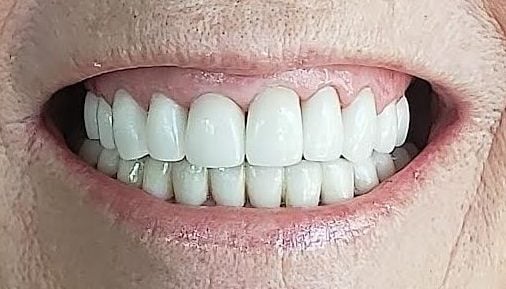
Dental crowns are custom tooth‑shaped caps used to repair and protect damaged, decayed, cracked, or weakened teeth when simpler restorations aren’t enough. Dr. Snyder recommends crowns for large cavities, fractures, root‑canal‑treated teeth, implant restorations, supporting a bridge, or improving misshapen or discolored teeth. Treatment involves a two‑step process: preparing the tooth and placing a temporary crown, followed by fitting and bonding the custom permanent crown from a trusted dental lab. Crowns restore full function, strengthen compromised teeth, improve appearance, and are designed to blend naturally with your smile. With good care, they typically last 10–15 years or more.
Uses for Crowns | Crown Process | Crown Benefits | Crown FAQs
What Is a Dental Crown?
A dental crown is a custom-created cap that fits snugly over a damaged, decayed, or weakened tooth. It’s designed to restore the tooth’s shape, strength, and appearance. Crowns are typically used after root canal therapy to repair a broken or cracked tooth or to improve the look of a tooth with extensive wear.When Are Dental Crowns Necessary?
Dental crowns are recommended in several situations:
- A tooth has a large cavity that can’t be repaired with a filling
- A tooth is cracked or fractured
- Following root canal treatment
- To support a dental bridge
- To cover a misshapen or discolored tooth
- As the final restoration of a dental implant
Each case is different, and Dr. Snyder carefully evaluates the tooth’s structure and long-term needs before recommending a crown.
Don’t Wait To Restore Your Teeth
Dental crowns are natural-looking restorations that can repair a range of dental problems, from minor to severe. Contact Brian H. Snyder, DDS today!
The Process for Getting Dental Crowns
Dr. Snyder uses a reliable two-step process in collaboration with a trusted dental lab. This approach allows for detailed customization and a long-lasting result that is difficult to achieve with most same-day options.
Step 1: Preparation and a Temporary Crown
At your first visit, we clean, disinfect, and reshape your tooth to make room for the crown. We then take an impression of the tooth and send it to our lab, where the permanent crown is fabricated. We place a temporary crown to protect your tooth while the permanent crown is made.
Step 2: Final Crown Placement
At the second appointment, we remove the temporary crown and the final crown is fitted. Dr. Snyder checks the fit, bite, and appearance before bonding it in place.
Benefits of Dental Crowns
- Restores function so you can bite and chew comfortably
- Protects weakened teeth from further damage
- Improves the appearance of discolored or worn-down teeth
- Custom-designed to blend with your natural smile
- Long-lasting with proper care and routine dental checkups
Dental Crowns FAQs
How long do dental crowns last?
With proper at-home care and regular checkups, crowns can last 10–15 years or more.
Can I eat normally with a crown?
Yes. Once your crown is placed, you can eat as you normally would. It’s a good idea to avoid very sticky or hard foods to prevent damage.
What’s the difference between a crown and a veneer?
A crown covers the entire visible surface of the tooth, while a veneer only covers the front surface of the tooth. You can learn more about the differences by reading our blog article Dental Crowns vs. Veneers.
Are dental crowns painful to get?
The procedure is generally well-tolerated. Dr. Snyder uses local anesthesia to keep you comfortable during the process. Some mild soreness or sensitivity may occur afterward, but it is usually short-lived.
Do crowns look like normal teeth?
Yes. Crowns are color-matched and shaped to blend with your natural teeth, making them virtually unnoticeable.
Brian H. Snyder, DDS
Patient Review by Michelle S
Great staff and doctors!
- Michelle S
